
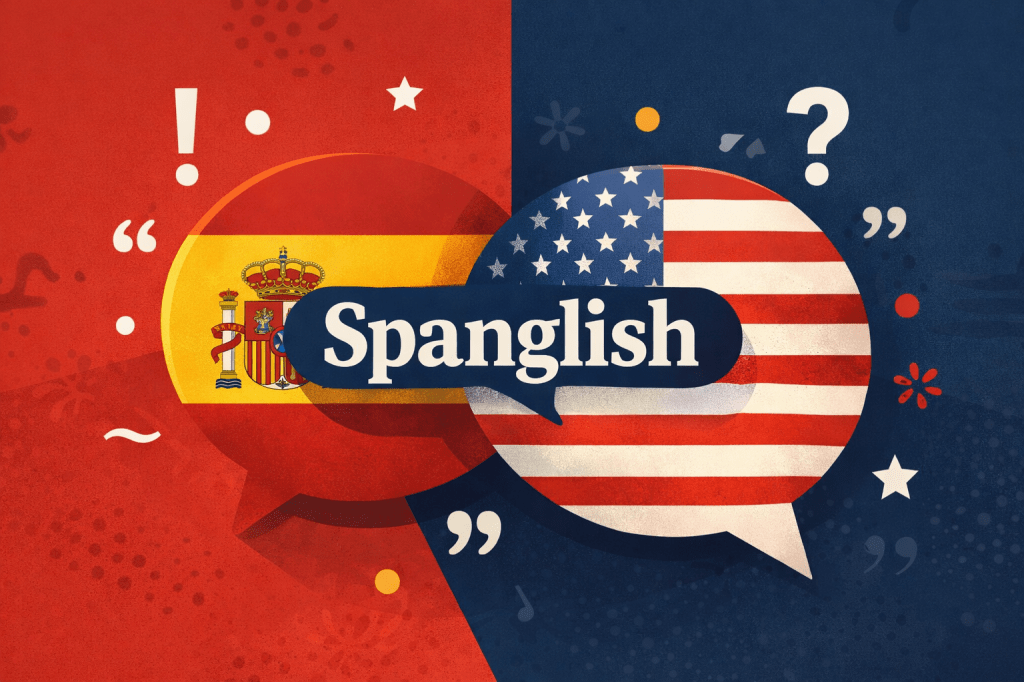
Spanglish is often treated as a joke.
A mistake.
A shortcut.
But Spanglish is none of those things.
At VOZ NYC, we understand Spanglish not as broken language, but as lived language — shaped by history, movement, identity, and necessity.
So what is Spanglish, really?
More Than Mixing Languages
At its most basic definition, Spanglish is the blending of Spanish and English. But that explanation barely scratches the surface.
Spanglish is not random.
It is not lazy.
And it is not accidental.
It emerges where cultures meet — in homes, neighborhoods, schools, workplaces, and across generations. It reflects how people actually think, feel, and communicate when more than one language lives inside them.
Spanglish follows its own internal logic, shaped by context rather than textbooks.
A Language of Identity
For many bilingual speakers, Spanglish is the most honest way to speak.
It carries intimacy.
Memory.
Belonging.
Switching between languages mid-sentence is often less about vocabulary and more about precision — choosing the word that best captures the feeling, even if it belongs to another language.
Spanglish allows people to exist fully, without having to choose one side of themselves over another.
Why Spanglish Is Often Criticized
Despite how widely it’s used, Spanglish is frequently dismissed.
It’s labeled “unprofessional.”
“Incorrect.”
“Improper.”
These critiques rarely come from linguistic concern. They come from power.
Languages tied to immigration, working-class communities, or racialized identities are often judged more harshly. Spanglish challenges traditional ideas about who gets to define “proper” speech — and that discomfort is often misdirected as criticism.
Spanglish as Cultural Expression
Spanglish is not a failure to master language.
It is a reflection of adaptation.
It tells a story of people navigating two worlds at once — translating themselves constantly, even when no one asks them to.
In that sense, Spanglish is deeply cultural. It carries humor, resilience, and creativity. It evolves as communities evolve.
And like any living language, it deserves respect.
Why These Conversations Matter
At VOZ NYC, we publish stories that recognize language as more than communication. Language is identity. Language is memory. Language is power.
Understanding Spanglish means understanding the people who speak it — not as exceptions, but as full participants in culture.
These conversations challenge narrow definitions of fluency and invite a broader understanding of what it means to belong.
Related Reading
These ideas are explored further in Your English Is Great, But…, a VOZ NYC-published book examining how language shapes identity, perception, and belonging.
 VOZ NYC
Leave a comment