
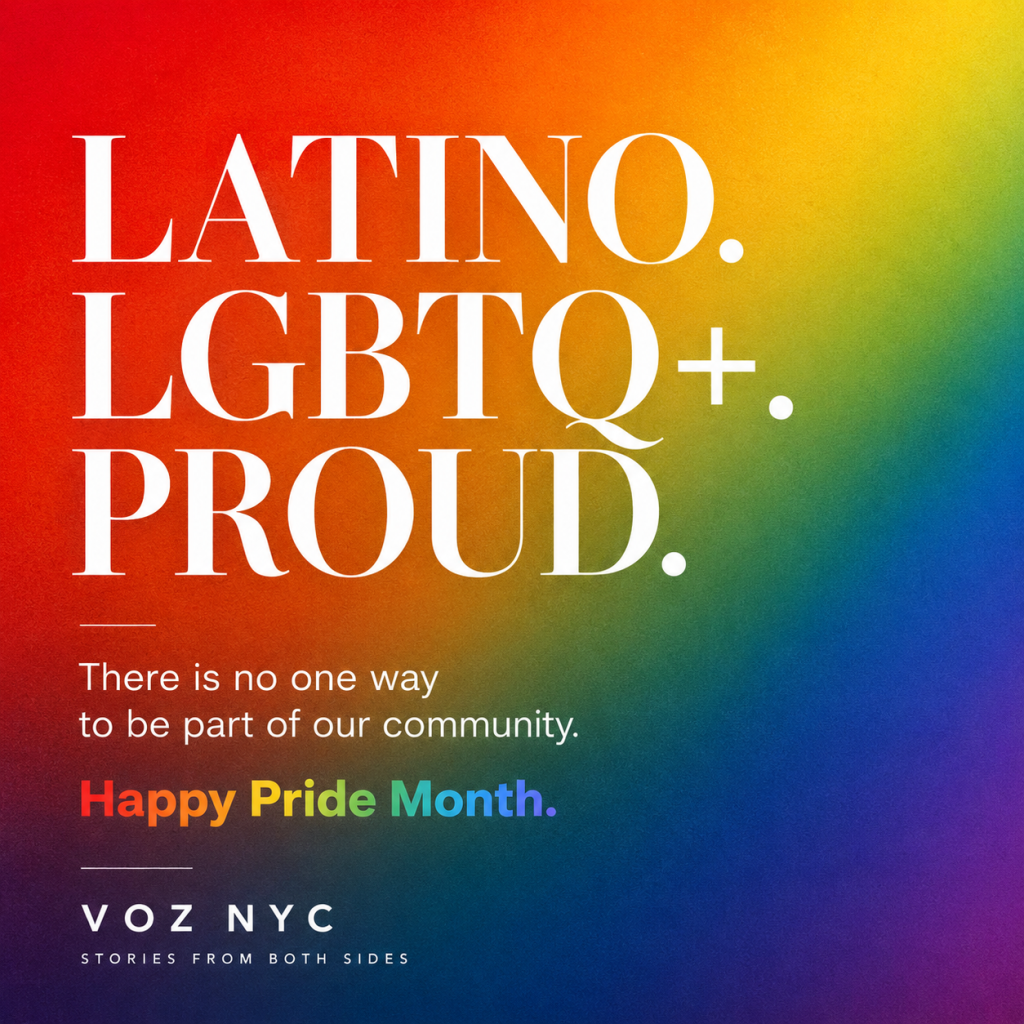
For much of modern history, LGBTQ+ Latinos have existed in a complicated space between visibility and invisibility.
They were always part of the community.
They were family members.
Neighbors. Artists. Teachers. Journalists. Musicians. Activists. Business owners.
Yet their stories were often absent from the narratives many Latino communities told about themselves.
Today, that is changing.
And Pride Month offers an opportunity to understand why.
A Community That Has Always Been There
One of the biggest misconceptions about LGBTQ+ Latinos is that they represent something new.
History suggests otherwise.
Long before modern Pride celebrations existed, LGBTQ+ people were part of Latin American societies in ways that are often overlooked in contemporary discussions.
Indigenous cultures throughout the Americas held diverse understandings of gender and identity.
Historical records from Mexico, Colombia, Peru, and other countries document LGBTQ+ individuals long before modern political movements emerged.
What changed was not the existence of LGBTQ+ people.
What changed was visibility.
The Weight of Silence
Throughout much of the twentieth century, conversations about sexuality within many Latino communities were shaped by a combination of religion, social expectations, family reputation, and cultural norms.
For many people, identity became something discussed quietly—if it was discussed at all.
Silence often became its own language.
Families knew.
Communities knew.
But acknowledgment was not always encouraged.
This dynamic created a unique experience for many LGBTQ+ Latinos.
The challenge was not simply understanding who they were.
The challenge was navigating spaces where identity, family, culture, and belonging often felt deeply interconnected.
Representation Changed Everything
The rise of Latino representation in media helped transform that landscape.
For decades, LGBTQ+ Latino characters were either absent or reduced to stereotypes.
Today, audiences have access to a growing number of stories that reflect a broader reality.
Television, film, journalism, literature, podcasts, and digital media have created space for voices that previous generations rarely encountered.
Representation does not solve every problem.
But it changes something important.
It expands what people believe is possible.
When people see themselves reflected with complexity and humanity, belonging becomes easier to imagine.
The Latino Community Is Not Standing Still
One reason conversations around Pride Month feel different today is because Latino communities themselves are changing.
Second-generation and third-generation Latinos are often navigating identity differently than previous generations.
Many younger Latinos are growing up in multicultural environments where conversations about sexuality, gender, and identity are more common than they were decades ago.
This does not mean disagreement has disappeared.
Far from it.
But it does mean the conversation has expanded.
And culture evolves through conversation.
Not all at once.
Not perfectly.
But steadily.
Why Visibility Matters
Visibility is often misunderstood as attention.
In reality, visibility is about recognition.
It is about seeing people as full participants in the story of a community.
LGBTQ+ Latinos are not separate from Latino culture.
They are part of it.
They always have been.
Their stories are woven into the history of neighborhoods, families, businesses, churches, schools, media organizations, and cultural institutions throughout the Americas.
Pride Month is not simply a celebration of identity.
It is a reminder that communities grow stronger when more people can see themselves reflected within them.
Looking Ahead
The future of Latino communities will be shaped by many forces: migration, language, technology, education, and demographic change.
But it will also be shaped by whose stories are told.
Visibility alone is not enough.
Representation alone is not enough.
The goal is something deeper.
Belonging.
And perhaps one of the most significant cultural shifts happening today is that more LGBTQ+ Latinos are finding space not only to be visible—but to belong.
—
VOZ NYC
Stories From Both Sides.

Leave a comment