When people talk about American culture, they often focus on politicians, celebrities, or major historical events.
What gets overlooked are the individuals who quietly—and sometimes boldly—expanded the definition of who belongs in the story.
For generations, LGBTQ+ Latinos have helped shape American culture through activism, journalism, entertainment, literature, politics, and the arts. Their contributions have influenced everything from public policy to television screens, often while navigating the complexities of identity, language, family, and belonging.
This Pride Month, we look back at a few of the LGBTQ+ Latinos whose impact continues to be felt across the country.
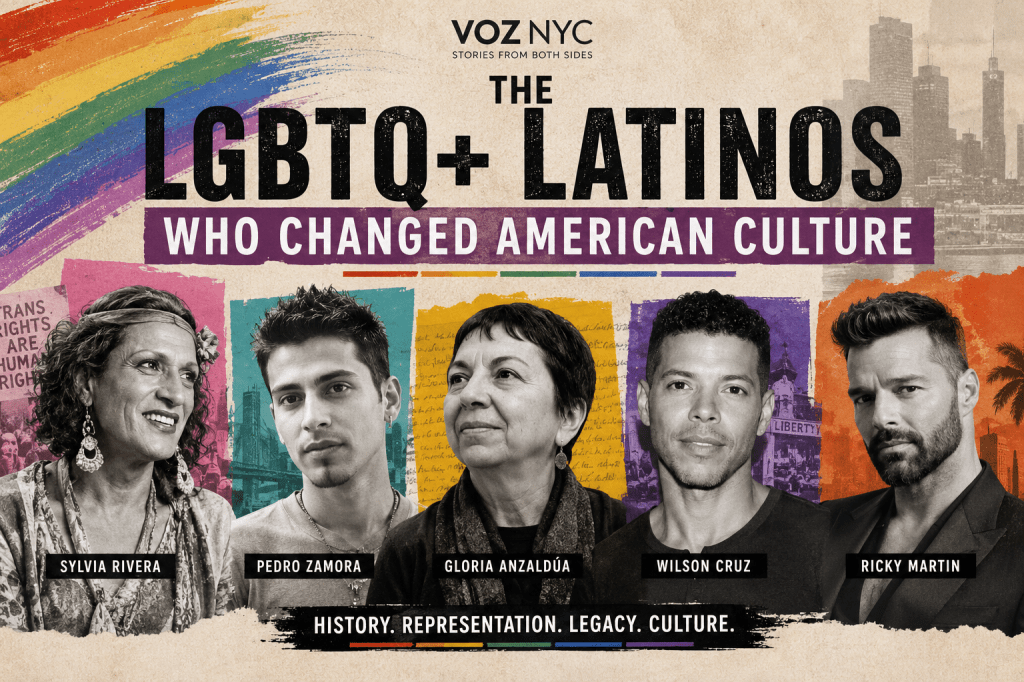
Sylvia Rivera: A Pioneer of the LGBTQ+ Rights Movement
Long before Pride Month became a national celebration, Sylvia Rivera was fighting for LGBTQ+ visibility and equality.
Born in New York City to Puerto Rican and Venezuelan parents, Rivera became one of the most influential voices in the early LGBTQ+ rights movement. She is widely recognized for her role in the events surrounding the 1969 Stonewall uprising and for her lifelong advocacy on behalf of transgender people and those experiencing homelessness.
Today, Rivera remains one of the most important figures in LGBTQ+ history.
Pedro Zamora: Changing America Through Television
For many Americans in the 1990s, Pedro Zamora was the first openly gay Latino they had ever seen on television.
The Cuban-American educator and AIDS activist appeared on MTV’s The Real World: San Francisco in 1994, using his platform to educate viewers about HIV and challenge misconceptions surrounding the epidemic.
His honesty, vulnerability, and advocacy helped change public conversations about HIV/AIDS and LGBTQ+ visibility at a time when both remained deeply stigmatized.
Gloria Anzaldúa: Giving Language to Identity
Few writers have had a greater influence on conversations about identity, culture, and belonging than Gloria Anzaldúa.
The Mexican-American scholar, writer, and activist challenged traditional ideas about borders—not only geographic borders, but cultural and personal ones as well.
Her groundbreaking work explored what it means to exist between languages, cultures, and identities, making her one of the most influential voices in American literature and cultural studies.
Wilson Cruz: Representation on Screen
Before LGBTQ+ representation became more common in mainstream television, actor Wilson Cruz helped break barriers.
Best known for his role as Rickie Vasquez on My So-Called Life, Cruz became one of the first openly gay Latino actors to portray a gay Latino teenager on network television.
For many viewers, his character offered a rare glimpse of authenticity at a time when such representation was difficult to find.
Ricky Martin: Visibility on a Global Stage
Few Latino entertainers have had a larger cultural impact than Ricky Martin.
While his music career made him an international star, his decision to publicly come out in 2010 became a landmark moment for LGBTQ+ visibility within Latino communities around the world.
For many people, Martin’s openness challenged assumptions about identity, masculinity, and success within mainstream entertainment.
Why These Stories Matter
The history of LGBTQ+ Latinos in America is not separate from the history of America itself.
These individuals helped shape conversations about civil rights, public health, media representation, literature, and culture.
Their contributions remind us that LGBTQ+ Latinos have never existed on the margins of the story.
They have helped write it.
And as new generations continue expanding what representation and belonging look like, their legacy remains a powerful reminder that visibility is not simply about being seen.
It is about being recognized as part of the culture.
Part of the community.
Part of the story.
—
VOZ NYC
Stories From Both Sides.

Leave a comment