
Long before social media gave people a platform to tell their own stories, television often served as a mirror.
Sometimes it reflected reality.
Sometimes it distorted it.
And sometimes, for LGBTQ+ Latinos, it offered one of the first opportunities to see parts of themselves represented on screen.
For decades, LGBTQ+ characters were rare in mainstream television. Latino LGBTQ+ characters were even rarer.
When they did appear, they were often reduced to stereotypes, comic relief, or side characters whose stories never fully belonged to them.
That is why representation matters.
Not because television solves social problems.
But because stories influence how people understand themselves—and how society understands them.
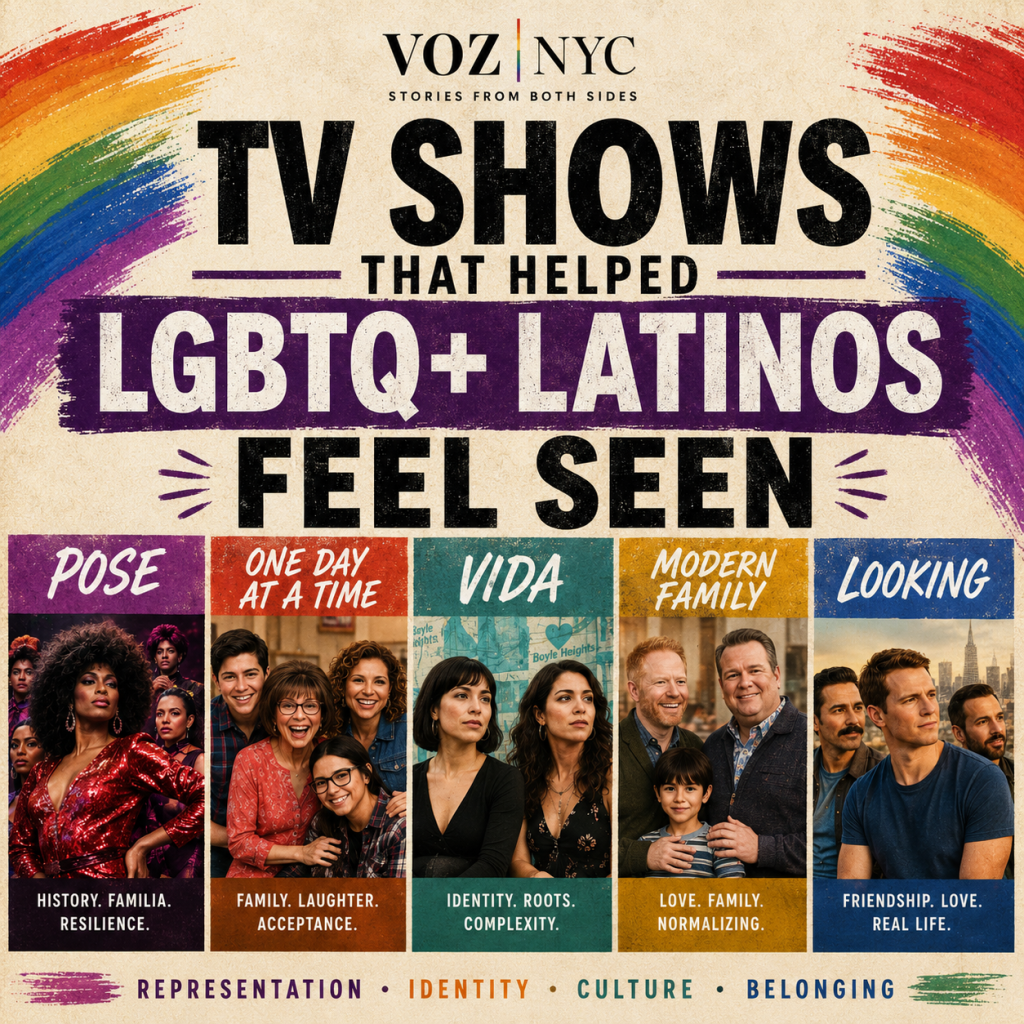
This Pride Month, we look back at some of the television shows that helped LGBTQ+ Latinos feel seen.
Pose
Few television series have had the cultural impact of Pose.
Set within New York City’s ballroom scene during the 1980s and 1990s, the show introduced mainstream audiences to stories that had long existed outside of mainstream media.
The series centered LGBTQ+ people as leaders, dreamers, artists, parents, and community builders.
For many viewers, Pose was more than a television show.
It was a history lesson.
A celebration.
And a reminder that LGBTQ+ communities have always created spaces of belonging.
One Day at a Time
Netflix’s reimagining of One Day at a Time became one of the most important Latino family comedies of the last decade.
At the center of the story was Elena Alvarez, a Cuban-American teenager navigating questions about identity, family, and sexuality.
What made the show unique was its willingness to explore LGBTQ+ experiences within a Latino household without reducing those experiences to a single storyline.
It showed disagreement.
Growth.
Love.
Humor.
And the reality that families are capable of evolving.
Vida
Set in a rapidly changing Los Angeles neighborhood, Vida explored sexuality, culture, family, grief, and identity through a distinctly Latino lens.
The show challenged assumptions about what LGBTQ+ Latino stories could look like.
It was complex.
Messy.
Beautiful.
And deeply rooted in community.
For many viewers, it felt authentic in ways television rarely achieves.
Modern Family
While not specifically focused on Latino LGBTQ+ identity, Modern Family helped normalize same-sex parenting for millions of viewers.
Mitchell and Cameron became one of the most recognizable LGBTQ+ couples in television history.
Their storylines often centered not on difference, but on everyday family life.
And sometimes normalization can be just as powerful as visibility.
Looking
HBO’s Looking brought a quieter approach to LGBTQ+ storytelling.
Rather than focusing on dramatic conflict, the series explored friendship, relationships, ambition, and adulthood.
Its strength was its humanity.
For many viewers, seeing LGBTQ+ characters simply living their lives felt groundbreaking.
Why Representation Still Matters
Today’s television landscape is far more inclusive than it was twenty years ago.
Yet representation remains important because visibility shapes possibility.
When people see characters who reflect their experiences, they gain something larger than entertainment.
They gain recognition.
For many LGBTQ+ Latinos, these shows helped create that recognition.
They offered stories that felt familiar.
Characters who felt real.
And moments that reminded viewers they were not alone.
Television may not change the world by itself.
But it can change the way people see themselves within it.
What Show Made You Feel Seen?
Every generation has its own defining stories.
Its own characters.
Its own moments of recognition.
This Pride Month, we want to know:
What television show helped you feel seen?
—
VOZ NYC
Stories From Both Sides.

Leave a comment