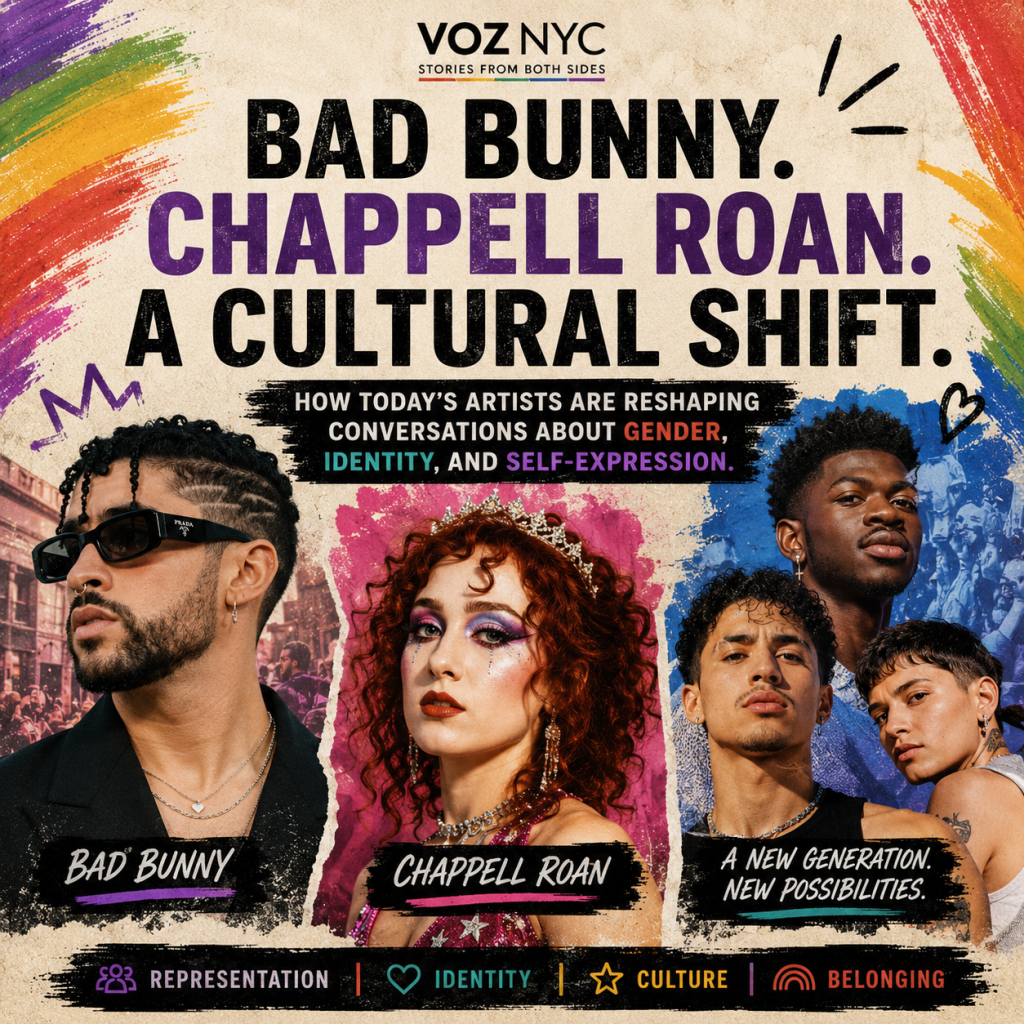
A decade ago, it would have been difficult to imagine some of today’s biggest artists becoming cultural icons while openly challenging traditional ideas about gender, sexuality, and identity.
Yet that is exactly what is happening.
Artists like Chappell Roan, Bad Bunny, Lil Nas X, Omar Apollo, and others are helping reshape conversations that once felt confined to activist spaces, academic discussions, or private conversations.
Today, those conversations are happening on stadium stages, social media feeds, award shows, and playlists listened to by millions.
And that shift tells us something important about culture.
Pop Culture Has Always Been a Mirror
Music has long reflected social change.
Elvis Presley challenged cultural norms.
Madonna pushed conversations about sexuality into the mainstream.
Prince blurred boundaries around masculinity and gender expression.
Each generation has artists who expand what audiences consider possible.
Today’s artists are continuing that tradition.
The difference is that they are doing so in a world where identity is discussed more openly than ever before.
The Bad Bunny Effect
Perhaps no artist better represents this cultural shift than Bad Bunny.
The Puerto Rican superstar has become one of the most influential musicians in the world while repeatedly challenging expectations about masculinity.
Whether wearing skirts in magazine covers, painting his nails, speaking out against homophobia, or embracing fashion choices traditionally viewed as feminine, Bad Bunny has demonstrated that confidence and masculinity are not mutually exclusive.
Importantly, he has done so while remaining deeply connected to Latino culture.
For many fans, that visibility matters.
It challenges the idea that cultural pride and self-expression must exist in separate spaces.
Chappell Roan and a New Generation of Visibility
Chappell Roan’s rise has become one of the defining pop culture stories of the decade.
Her unapologetic embrace of queer identity, theatrical performances, and celebration of individuality have resonated with audiences looking for something authentic.
What makes her impact significant is not simply that she is visible.
It is that visibility no longer feels niche.
Artists who openly discuss sexuality and identity are increasingly becoming mainstream cultural figures rather than exceptions.
That represents a dramatic shift from previous generations.
Why Younger Audiences Respond Differently
Many younger audiences have grown up in a media environment where conversations about identity are more common than they were twenty or thirty years ago.
As a result, many fans are less interested in rigid categories and more interested in authenticity.
They are drawn to artists who appear comfortable being themselves.
Whether that means challenging gender expectations, embracing fluidity, or simply refusing to fit neatly into traditional labels.
In many ways, the appeal is less about identity itself and more about freedom.
Freedom to express.
Freedom to create.
Freedom to define yourself.
Latino Culture Is Changing Too
These conversations are particularly significant within Latino communities.
For generations, ideas about masculinity, femininity, family, and identity were often shaped by deeply rooted cultural traditions.
Those traditions continue to influence many communities today.
But culture is never static.
Each generation interprets it differently.
The growing popularity of artists who challenge traditional expectations suggests that younger Latinos are engaging with questions of identity in new ways.
Not by abandoning culture.
But by expanding it.
More Than Entertainment
It would be easy to dismiss these artists as simply entertainers.
But popular culture has always helped shape public conversations.
Music influences fashion.
Fashion influences identity.
Identity influences culture.
And culture influences what future generations see as normal.
That is why artists matter.
Not because they provide all the answers.
But because they help societies imagine new possibilities.
What Comes Next?
The most interesting question may not be whether artists are changing conversations about gender and identity.
They clearly are.
The question is how those conversations will continue evolving as younger generations gain greater influence over culture, media, and public life.
If current trends are any indication, the future will likely be more diverse, more visible, and more difficult to place into neat categories.
And perhaps that is exactly the point.
—
VOZ NYC
Stories From Both Sides.

Leave a comment