
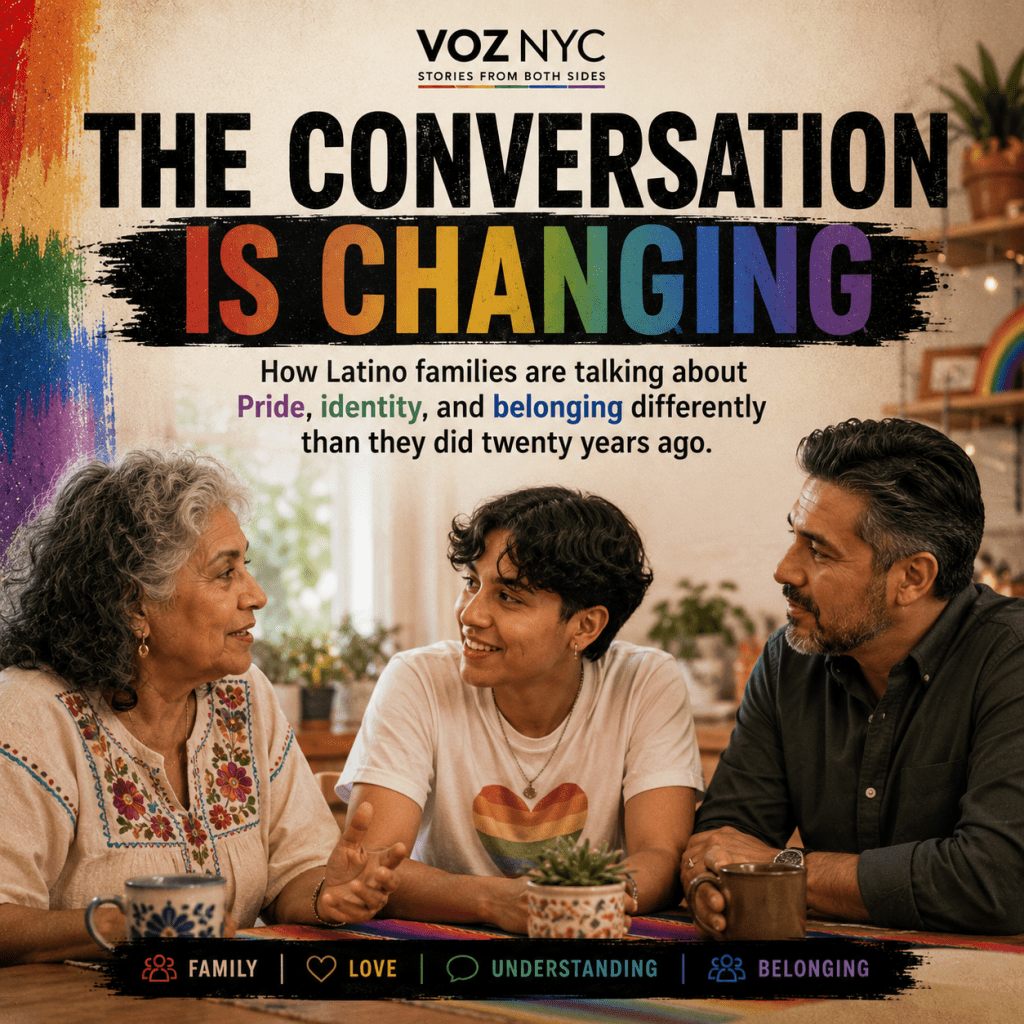
Twenty years ago, many conversations about LGBTQ+ identity within Latino families happened quietly—if they happened at all.
Today, those conversations still aren’t always easy.
But they are happening more often.
And that tells us something important about how Latino communities are changing.
Pride Month is often viewed through the lens of parades, celebrations, and public visibility. Yet some of the most significant changes are happening far from city streets and social media feeds.
They’re happening at kitchen tables.
Family gatherings.
Holiday celebrations.
Group chats.
And in the everyday conversations that shape culture over time.
The Language Has Changed
For many Latino families, previous generations often lacked the vocabulary to discuss sexuality and gender openly.
That doesn’t necessarily mean there was less love.
But there was often less language.
Topics that felt uncomfortable were frequently left unspoken.
Questions went unanswered.
Assumptions filled the silence.
Today, younger generations have grown up in a media environment where conversations about identity are more visible than ever before.
As a result, many families are having discussions that would have been difficult to imagine twenty years ago.
Not because everyone agrees.
But because more people are willing to talk.
Visibility Changed the Conversation
Representation has played a major role in this shift.
Television.
Film.
Music.
Social media.
Journalism.
For many families, LGBTQ+ identity is no longer something encountered only in the abstract.
It is represented in the stories they watch, the artists they follow, the coworkers they know, and the people they love.
Visibility does not automatically create understanding.
But it often creates familiarity.
And familiarity can reduce fear.
Younger Generations Are Expanding the Definition of Family
One of the most significant cultural changes is how younger Latinos define belonging.
Previous generations often viewed identity through a narrower lens shaped by social expectations, religion, and traditional gender roles.
Many younger Latinos still value family deeply.
But they are increasingly questioning the idea that acceptance requires conformity.
For them, family and individuality do not have to exist in opposition.
They can coexist.
Change Rarely Happens All at Once
It would be easy to tell a story in which Latino communities suddenly became more accepting.
Reality is more complicated.
Culture does not change overnight.
Every family moves at its own pace.
Some conversations remain difficult.
Some tensions remain unresolved.
And many people continue navigating the space between tradition and change.
But cultural progress is rarely measured by perfection.
It is measured by movement.
And movement is happening.
The Latino Community Has Always Evolved
Perhaps the biggest misconception about Latino culture is that it remains fixed.
History suggests otherwise.
Latino communities have continually adapted to migration, language shifts, economic change, technology, and new generations.
The conversations happening around Pride today are part of that larger story.
Not a break from tradition.
But another chapter in the ongoing evolution of culture itself.
What Pride Looks Like Today
For some people, Pride Month means attending a parade.
For others, it means sharing a story online.
For many families, it means something quieter.
A conversation that finally happens.
A question that finally gets asked.
An understanding that gradually grows over time.
Those moments rarely make headlines.
But they often change lives.
And perhaps that is where cultural change happens most powerfully—not in a single event, but in the everyday conversations that help people feel seen, understood, and valued.
—
VOZ NYC
Stories From Both Sides.

Leave a comment